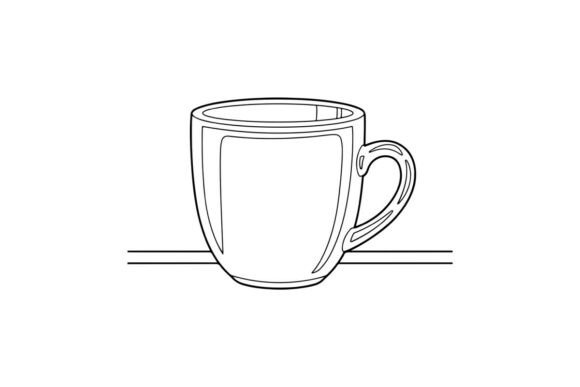
Simple Outline Coffee Mug
A Designer’s First Glance: Clean, Calm, and Craft-Ready
When I opened Simple Outline Coffee Mug, my first thought wasn’t “cute” or “trendy”—it was “this will stitch cleanly.” As someone who’s digitized hundreds of embroidery files and stitched thousands of real-world projects—from baby onesies to boutique aprons—I appreciate how rare it is to find line art that translates so naturally to thread. The mug shape is balanced and generous, with smooth curves, no tight interior corners, and just enough handle definition to read clearly at 3–4 inches wide. It doesn’t try to be intricate; it leans into simplicity as a strength—not minimalism for its own sake, but clarity built for craft.
Where It Lives Best: Real Projects, Not Just Pixels
Last week, I prepped a small-batch run of linen tea towel sets for a local café pop-up. I chose Simple Outline Coffee Mug as the central motif—centered, scaled to 3.5″, stitched in matte black cotton thread on natural unbleached linen. Why? Because it held up beautifully on textured fabric without losing legibility. No fill stitches bled, no satin edges frayed, and the outline stayed crisp even after two rounds of gentle machine washing (a must for kitchen goods). That same design later became a subtle chest embroidery on organic cotton sweatshirts for a slow-living lifestyle brand—and again, it worked. Not flashy, but unmistakably handmade, intentional, and quietly confident.
It shines in contexts where restraint reads as quality: embroidered patches for coffee roasters, minimalist tote bag designs for indie bookshops, baby bibs with soft pastel thread, holiday gift tags stitched onto canvas pouches, or even as a single motif on a ceramic mug sleeve. Its neutral theme bridges seasons and audiences—no florals to date it, no slogans to limit appeal, no seasonal cues to box it in. For Etsy sellers and small shop owners, that versatility is gold.
Where to Pause—Not Every Fabric or Fit Is Equal
That said, Simple Outline Coffee Mug isn’t magic. On highly stretchy fabrics like lightweight jersey or ribbed knits, the outline can distort if stabilizer isn’t chosen carefully—especially around the curve of the mug base. I recommend cutaway + tear-away combo for anything with give. On dark fabrics, test contrast early: light gray or ecru thread reads softer than expected, while charcoal or navy gives stronger definition without looking heavy. And avoid placing it directly over seams or curved surfaces like cap fronts unless you’ve tested hoop clearance—its clean lines rely on consistent tension, which caps often challenge.
Also worth noting: because it’s an outline-only design (no fills, no internal detail), it’s forgiving on thin fabrics like voile or chambray—but don’t assume it’ll hold up on sheer organza without backing. And while it’s ideal for beginner-friendly projects, don’t skip testing small details like the mug’s steam swirl or handle join on scrap first. What looks clean on screen may need slight digitizing tweaks for your machine’s stitch behavior.
What It Adds to Your Finished Product—Beyond the Stitch
Customers notice confidence. When a design feels considered—not rushed, not overloaded—it signals care. Simple Outline Coffee Mug elevates a plain tote into a curated accessory, turns a basic sweatshirt into a thoughtful gift, and makes a nursery pillow cover feel like part of a cohesive story. It supports brand consistency without demanding attention—perfect for makers who want their products to whisper rather than shout.
For digital product sellers, it’s a strong anchor in a Coloring Pages Amp collection: line art that doubles as embroidery-ready graphics means broader reuse across platforms—printable mockups, SVG bundles, or layered PNG previews all benefit from its clarity. Just remember: if you’re selling finished embroidered items commercially, verify licensing terms before listing. This is a Graphics-category asset, not automatically cleared for unlimited resale—always check the source.
Practical Designer Notes—Before You Hoop It
- Test on scrap fabric first—especially if using textured, dark, or stretchy materials.
- Review stitch density: outline-only means low density, but confirm your digitized version avoids overly long jumps or skipped segments.
- Confirm hoop size compatibility: a 4″ x 4″ hoop handles it easily at standard scale, but double-check if resizing beyond 120%.
- Inspect small details: the steam curl and handle junction are subtle—zoom in digitally and stitch a sample to ensure they resolve cleanly.
- Try black-and-white mockups: outline designs live or die by contrast—see how it reads against both light and dark backgrounds.
- Use proper stabilizer: medium-weight cutaway for stable wovens; fusible + tear-away for knits.
- Check commercial use rights: if selling finished embroidered products or reselling digital files, confirm permissions with the original source.
Final Thought: Simplicity That Sells
In a market flooded with busy, over-digitized motifs, Simple Outline Coffee Mug stands out by doing less—and doing it well. It’s not a statement piece. It’s a reliable tool: for the craft business owner stitching 50 custom aprons before a farmers’ market, the Etsy seller bundling printable + embroidery files, the apparel decorator building a capsule collection, or the hobbyist making a heartfelt birthday gift. It works because it respects the process—the fabric, the thread, the machine, and the hand guiding it. And that’s the kind of design that earns repeat customers, not just one-time clicks.