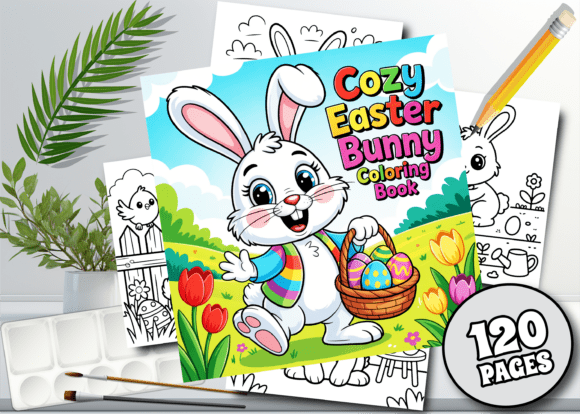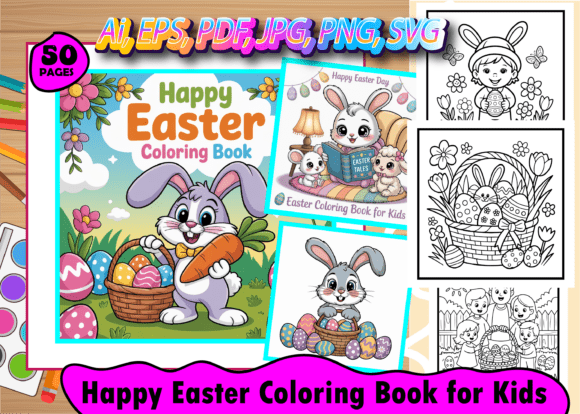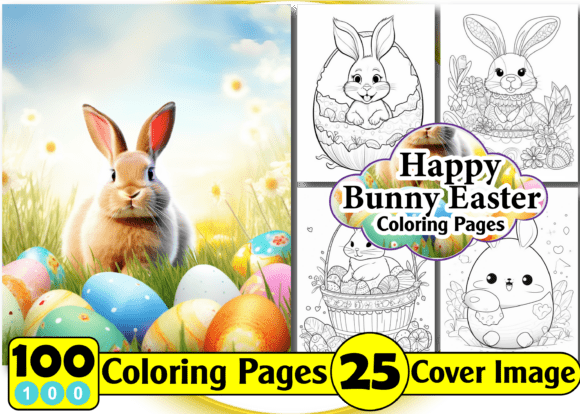
Happy Bunny Easter Coloring Pages Graphics
As a digital product creator who’s launched over 200 printable designs across Etsy, Creative Fabrica, and Shopify—mostly for seasonal crafters, Canva template sellers, and print-on-demand entrepreneurs—I opened Happy Bunny Easter Coloring Pages expecting charm, but what stood out was its quiet commercial versatility. This isn’t just another pastel bunny bundle. It’s a cohesive, adult-oriented graphic design asset with intentional line weight, balanced negative space, and subtle spring motifs that land somewhere between whimsical and refined—think soft watercolor-ready outlines, gentle curves, and just enough detail to feel engaging without overwhelming.
The mood is warm, unhurried, and gently festive—not overly saccharine or cartoonish. It leans feminine but avoids cliché; it’s decorative without being fussy. That makes it ideal for audiences who value mindful creativity: planners, wellness bloggers, small-batch stationery makers, and boutique gift shops targeting adults seeking low-pressure seasonal engagement. The illustrations feel handmade in spirit but polished enough for commercial use—exactly the sweet spot many digital sellers miss when sourcing coloring pages for resale.
In practice, I tested Happy Bunny Easter Coloring Pages across six real product categories before finalizing a listing. First, I dropped individual illustrations into Canva as base layers for editable greeting card templates—paired with a clean sans serif and a light script font, they held visual hierarchy beautifully. Second, I exported select pages as high-res PNGs with transparent backgrounds for sticker sheets (planner stickers, laptop decals), confirming crisp edges and no stray pixels. Third, I converted two key bunnies into SVG files using Illustrator’s Image Trace—clean cut lines, minimal anchor points, and no overlapping paths. That’s critical for Cricut users who need reliable, no-tweak silhouettes.
I also embedded them into sublimation mockups for mugs and tumblers. Because the line art has consistent 2-pt weight and generous interior spacing, the designs scaled cleanly at 3”–5” diameters without blurring or bleeding. For printable wall art, I layered one bunny illustration over a textured kraft paper background in Photoshop—no contrast issues, no loss of definition. And for social media graphics? A single bunny outline worked perfectly as a subtle watermark overlay on Instagram Reels promoting a spring-themed digital planner bundle.
Where Happy Bunny Easter Coloring Pages shines most is in product presentation. Its visual personality strengthens brand consistency across themed collections—imagine pairing it with coordinating Easter-themed digital paper packs, border elements, or even matching font pairings (I used Playfair Display for headings and Montserrat for body text). As an Etsy product thumbnail, the central bunny motif reads clearly at 400×400px. In a bundle preview, it adds warmth and cohesion without competing with bolder graphics. Customers scanning seasonal listings respond to that “hand-crafted calm”—it builds trust faster than generic clipart ever could.
This graphic design asset works best in contexts where tone and intention matter: printable design kits, Canva template suites, nursery-themed digital downloads, blog graphics for parenting or mindfulness sites, packaging design for small-batch chocolate or candle brands, and even as gentle visual anchors in email newsletters or Pinterest pins. It supports small business branding by offering a recognizable, seasonally relevant visual thread—without locking you into a single aesthetic.
That said, there are places to use Happy Bunny Easter Coloring Pages carefully. Avoid shrinking any illustration below 1.5” wide for physical sticker sheets—fine interior details (like tiny flower stems or whisker lines) lose clarity. Don’t place it directly over busy patterned backgrounds unless you’ve pre-tested contrast; some lighter linework fades on dark or textured substrates. And while the PNGs export cleanly, always verify transparency in your final file—especially if bundling with other assets. Also, skip embedding it into text-heavy Canva templates unless you adjust layer opacity or add subtle drop shadows; the delicate lines can visually recede.
Before publishing anything, run these practical checks: preview the design on both white and charcoal mockups, print a test page on standard 8.5×11 matte paper to assess line clarity, open the SVG in Cricut Design Space to confirm smooth cutting, and double-check resolution (all files should be 300 DPI at full size). Organize deliverables clearly—label PNGs by use case (e.g., “bunny-clipart-png”, “bunny-wall-art-png”), include a README with font pairing suggestions and commercial license confirmation, and group SVGs by complexity level (simple silhouette vs. detailed scene).
Finally, remember this: Happy Bunny Easter Coloring Pages isn’t a standalone hero—it’s a flexible, mood-forward ingredient. Used thoughtfully, it elevates digital download bundles, adds warmth to print-on-demand merchandise, and helps creative marketplace sellers stand out during a crowded seasonal window. It’s not flashy—but in digital selling, consistency, clarity, and quiet charm often convert better than loud novelty. For anyone building a sustainable catalog of printable design, commercial design, or SVG design assets, this is the kind of reliable, audience-aligned graphic design asset that earns repeat buyers and cross-sells naturally.